Signs of an Eating Disorder in Teens: What Parents Should Look For
Signs of an Eating Disorder in Teens: What Parents Should Look For
Written by Lily Thrope, LCSW
Understanding Eating Disorders in Teenagers
As a parent, you know your teenager better than almost anyone. You may notice subtle changes in their mood, behavior, or relationship with food long before you have a clear explanation for what's happening.
Maybe your teen has become increasingly concerned about their appearance. Perhaps they're avoiding certain foods, withdrawing from social activities, or seeming more anxious or irritable than usual. You might have noticed these changes for weeks or months without knowing whether they're cause for concern.
In my work as an eating disorder therapist, I know that recognizing the signs of an eating disorder in teens isn't always straightforward. Eating disorders and disordered eating can look different from one person to another, and some warning signs are easy to mistake for typical teenage behavior.
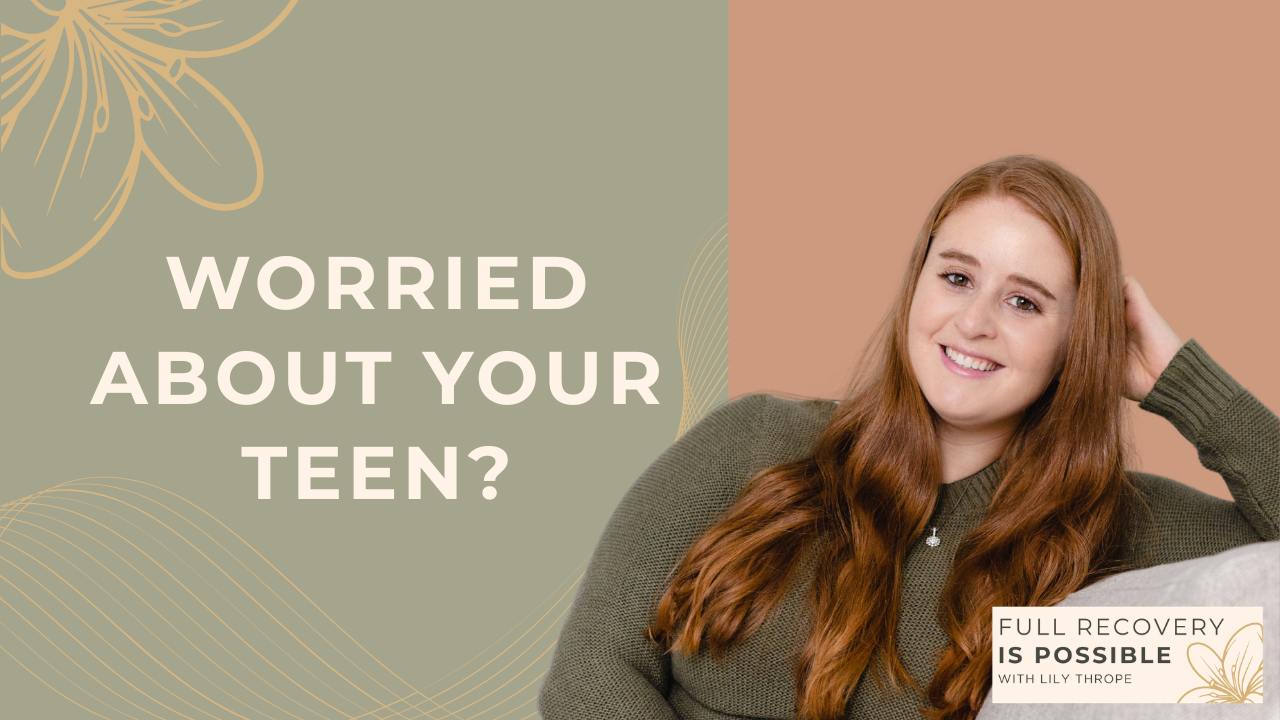
I created my limited podcast series, Full Recovery Is Possible, to help make conversations about eating disorders in teens less stigmatized and less overwhelming for parents. My goal is to help you recognize what might be happening, understand how to approach your teen, and feel more confident about getting them the support they deserve.
One of the most important things I want parents to know is this: You don't have to wait until you're certain something is wrong to get your teen support.
What Are the Early Warning Signs of Eating Disorders in Teens?
Eating disorders don't always begin with an obvious change in eating habits. Sometimes, the earliest signs appear in a teenager's mood, behavior, or relationship with their body.
Here are some of the patterns I encourage parents to pay attention to.
1. Increased preoccupation with food and appearance
One potential warning sign is a growing fixation on food, body image, or physical appearance.
You might notice your teen:
Frequently asking questions like, "Do I look fat?"
Taking many selfies or repeatedly checking their appearance.
Comparing how they look from one day to the next.
Becoming increasingly concerned about how their clothes fit or how their body looks in photographs.
Spending more time thinking or talking about food and their appearance.
These behaviors don't automatically mean your teen has an eating disorder. However, when concerns about appearance or food begin taking up significant mental space, it's worth paying attention.
I've worked with parents who describe watching their teenagers become increasingly preoccupied with their appearance over time. Sometimes, parents have done everything they can to encourage positive body image at home, only to discover that their teens are absorbing harmful messages from social media, television, and their peers.
These outside influences matter, too. Eating disorders don't develop in a vacuum, and parents can't always prevent their teens from encountering harmful messages about food and bodies.
2. Changes in eating habits or food preferences
Another potential sign is a growing rigidity around food.
For example, your teen might suddenly want only certain foods at dinner, ask for different groceries, or become increasingly restrictive about what they're willing to eat.
I encourage parents to pay attention to changes in their teen's relationship with food, especially when their choices seem to be becoming more rigid or are interfering with everyday life.
Rather than focusing on a single meal or food preference, consider the bigger picture. Is your teen becoming more anxious around eating? Are their food choices becoming increasingly limited? Are mealtimes becoming a source of stress?
Changes like these may be a reason to seek additional guidance.
3. Mood changes, anxiety, or depression symptoms
Sometimes, the signs of an eating disorder aren't primarily about food.
When someone isn't nourishing themselves adequately or is exercising excessively, they may experience symptoms such as depression and anxiety. In my work, I've spoken with parents who describe their previously happy, positive teens becoming more anxious, negative, or withdrawn.
It's important to consider whether these changes could be connected to your teen's relationship with food and exercise.
This is one reason I believe it's so important for mental health professionals to ask about eating habits. When a teenager comes in for anxiety, depression, or other challenges, we shouldn't overlook the possibility that disordered eating may also be contributing to what they're experiencing.
If you've noticed a change in your teen's mood, it may be worth looking beyond the symptoms themselves and asking whether something else could be going on.
4. Withdrawing from social activities
Eating disorders can affect much more than what someone eats.
You may notice your teen attending fewer social events, avoiding activities involving food, or becoming less interested in things they previously enjoyed.
When food, body image, or exercise begins to take up more mental and emotional energy, it can become harder to participate in everyday life.
If your teen seems increasingly isolated or their behavior has changed, try to approach the situation with curiosity rather than immediately assuming you know what's causing it.
5. Increasing exercise or cutting back on food
Parents of active teens, particularly those involved in sports, may not immediately recognize a potentially concerning relationship between exercise and nutrition.
A teenager can appear healthy, athletic, or highly disciplined while struggling with disordered eating.
I've seen how eating disorders can go unnoticed in teens who are active in sports, especially when reducing food intake and increasing exercise are mistaken for dedication or discipline.
When someone is exercising frequently while also reducing their food intake, there can be serious medical consequences, including risks to heart health and bone density.
Eating disorders can affect teenagers of any gender, body size, or activity level. You don't need to see a particular body type or an obvious physical change to take your concerns seriously.
Can Eating Disorders in Teens Look Different in Boys and Girls?
Eating disorders affect people of all genders, but the behaviors surrounding them may not always look the same.
In my clinical work, I've noticed that some girls experience pressure to make changes to their bodies appear effortless, while some boys may be more visibly focused on gym attendance, fitness, rigid eating habits, or demonstrating discipline.
These are patterns I've observed, not universal rules. Teenagers of any gender can experience body dissatisfaction, restrictive eating, compulsive exercise, or intense concerns about their appearance.
One concern I have is that eating disorders in boys can be overlooked when their behaviors are interpreted as dedication to sports, fitness, or healthy eating.
I've spoken with parents who discovered that their sons had been struggling with restrictive eating and excessive exercise for years before anyone recognized what was happening.
If your son is becoming increasingly rigid around food or exercise, don't assume that his behavior is harmless simply because it doesn't match your expectations of what an eating disorder looks like.
What If Your Teen Doesn't Think Anything Is Wrong?
Not every teenager will recognize that they're struggling with an eating disorder or disordered eating.
In my experience, some teens resist the idea that they need help, while others feel relieved when someone finally notices how much they're struggling.
A teenager might feel exhausted by constant thoughts about food, their appearance, or their body but still feel uncertain about recovery. Another teen may not believe their behaviors are concerning at all.
Both experiences deserve compassion and appropriate support.
I also want parents to understand that eating disorders can serve as a coping mechanism for something else going on emotionally. What looks like a problem with food or appearance may be connected to stress, difficult emotions, or other experiences your teen is trying to navigate.
Understanding what's happening beneath the surface is an important part of supporting recovery.
How Should Parents Talk to a Teenager About Eating Disorder Concerns?
If you've noticed concerning changes in your teen, it can be difficult to know what to say. You want them to know you're paying attention, but you don't want to make them feel judged or scrutinized.
I encourage parents to focus on communicating care and offering support rather than pointing out everything they believe is wrong.
Focus on support, not their appearance
Comments about a teenager's body, even when intended to be helpful, can leave them feeling as though their appearance is being evaluated.
Instead of making their body or eating habits the center of the conversation, consider starting with a broader concern.
For example, you might say:
"I've noticed you've seemed more stressed lately, and I want to make sure you have the support you need."
"You've had a lot going on recently. Would it help to have someone outside the family to talk to?"
"You deserve to have support with whatever you're dealing with. We can figure out what that looks like together."
These are just examples, and I know that every family and teenager is different. The goal is to communicate that you care and want to help without making your teen feel as though they're being criticized.
I sometimes think of this as a "backdoor approach." Rather than immediately confronting your teen about what you suspect is an eating disorder, you open the door to a conversation about their stress, well-being, and need for support.
This can help your teen feel less as though their body is being monitored or judged and more as though you're genuinely interested in how they're doing.
Work with your teen rather than making decisions for them
I believe it's important to help teenagers feel empowered to participate in decisions about their care.
Whenever possible, approach support as something you can explore together. Ask what your teen is experiencing, listen to their concerns, and involve them in figuring out the next steps.
This doesn't mean ignoring serious concerns or leaving a teenager entirely responsible for their own care. Family involvement can be an important part of treatment. Rather, it's about balancing appropriate parental involvement with opportunities for your teen to feel heard and supported.
When teens feel empowered to make changes, those changes can feel more authentic and sustainable than when they feel everything is being decided for them.
Don't wait for things to get worse
One of the most important things I want parents to take away from this conversation is that earlier support matters.
I understand why parents sometimes hesitate to reach out. You might worry about overreacting, creating stigma, or making your teen feel as though something is wrong with them.
But you don't need to wait until your concerns become overwhelming to seek guidance.
The earlier a teen can access appropriate support, the more opportunity they have to develop tools for navigating stress, emotions, relationships, and other challenges as they grow.
Think about the transitions ahead of your teenager's life, from applying to college to navigating their first serious relationship. These experiences can bring stress and uncertainty. Helping teens build coping skills before those challenges arise can give them a stronger foundation.
If you're concerned about your teen's eating habits, exercise patterns, or relationship with their body, speaking with a professional who specializes in eating disorders can help you understand what you're seeing and determine appropriate next steps.
Eating Disorder Recovery Is Possible for Teens
Watching your teenager struggle can feel frightening, especially when you're unsure what's happening or how to help.
I want parents to know that you don't have to figure everything out on your own. You also don't need to have a diagnosis or a complete understanding of the problem before reaching out for guidance.
Eating disorders are complex, and recognizing the warning signs is only the beginning. With appropriate support, teenagers can work toward a healthier relationship with food, their bodies, and their emotional well-being.
I founded Thrope Therapy because I wanted to create a practice where eating disorder treatment is a central focus, not an afterthought. I want clients and their families to know that they can receive specialized support and that recovery is possible.
My goal is to help teens move beyond the distress and preoccupation that can accompany eating disorders and build lives that feel more manageable and fulfilling.
If you're concerned about your teenager, consider reaching out to an eating disorder professional to discuss what you've been noticing and explore possible next steps.
You don't have to wait until things get worse to ask for help.
Listen to Full Recovery Is Possible With Lily Thrope
I created Full Recovery Is Possible to help make conversations about eating disorders in teenagers less stigmatized and less scary for parents.
In this first episode, I discuss early warning signs of eating disorders in teens, why these struggles can be difficult to recognize, how disordered eating may show up differently across teens, and ways parents can approach their concerns.
Concerned about your teen's relationship with food or their body? At Thrope Therapy, we provide specialized eating disorder support.