
FULL RECOVERY IS POSSIBLE : A LIMITED SERIES
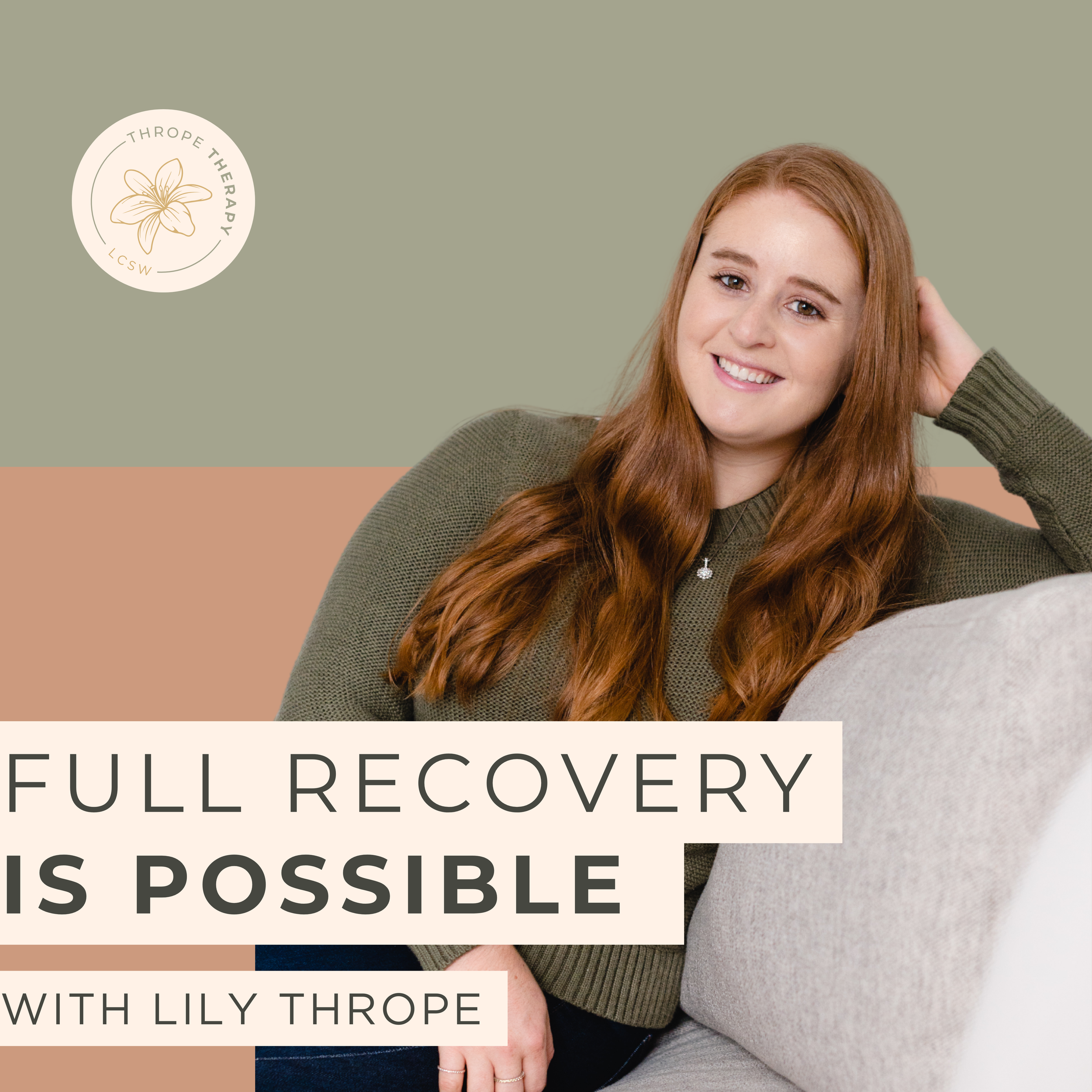
Lily Thrope wants you to know that when it comes to disordered eating in teens, full recovery is completely possible!
Before parents find themselves on a call with one of Thrope Therapy’s clinicians, they start noticing signs that concern them, often over the course of months:
Their teen may start speaking more negatively about bodies: theirs or others’
Their eating habits might change
They may be becoming more rigid with exercise
They might be showing other signs of anxiety or depression
But parents often think: “I’m just overreacting,” “It’s a phase,” “She eats plenty at home,” or “Surely, the pediatrician would have flagged it if something was wrong.”
But eating disorders don’t always present in the ways parents expect.
In this series, Lily Thrope dives into everything parents need to know to get their teens the help they need before the “little things” become big ones.
You’ll learn:
The most surprising signs of eating disorders in teens
The most dangerous myths and misconceptions about disordered eating most people don't realize
How eating disorders present differently in teen girls vs. teen boys
How eating disorders affect teens in larger bodies at staggering rates, and why they get missed
How to cope with the emotions that come up for parents who worked so hard to “do everything right”
How to talk to your teen about your concerns, even if they’re denying there’s something wrong
What therapy can look like for eating disorder recovery
When to consider getting help for your teen, yourself, and your family
Our final episode is for you and your teen to listen to together, so you don’t have to go it alone.
Things might feel heavy right now, but don’t forget: full recovery is possible.

More Understanding. Less Guessing.
By the end of this series, you’ll have a clearer understanding of what eating disorders can look like in teenagers, and what you can do when something feels off.
You’ll walk away with:
A better understanding of the warning signs.
Learn what to look for beyond the stereotypes and misconceptions that can make eating disorders difficult to recognize.
More confidence starting the conversation.
Learn how to bring up your concerns without turning the conversation into a battle over food, weight, or appearance.
A deeper understanding of your teen’s experience.
Eating disorders are about so much more than food. We’ll explore the emotional, social, and cultural factors that can influence a teen’s relationship with food and their body.
A clearer picture of what treatment can look like.
If your teen does need support, you’ll have a better sense of what eating disorder therapy involves and what the road ahead might look like.
Reassurance that you don’t have to figure this out alone.
As a parent, you deserve support, too. Your role in recovery matters, and so does having a place to process your own fear, guilt, and uncertainty.
Wondering What To Do Next?
Maybe this series helped you put words to something you’ve been noticing.
Maybe you’re still not sure whether your teen needs help.
Or maybe you’re realizing that it’s time to reach out.
You don’t have to wait until you’re completely certain. You don’t have to wait for things to get worse. And you don’t have to know exactly what to say when you make the call.
At Thrope Therapy, we work with teens and families navigating eating disorders, disordered eating, body image concerns, and the many questions that can come with recovery.
If something feels off, we’re here to help you figure out what comes next.