Emotional Eating: What Your Brain Is Really Looking For and How to Find More Sources of Comfort
Emotional Eating: What Your Brain Is Really Looking For and How to Find More Sources of Comfort
Written by Lily Thrope, LCSW
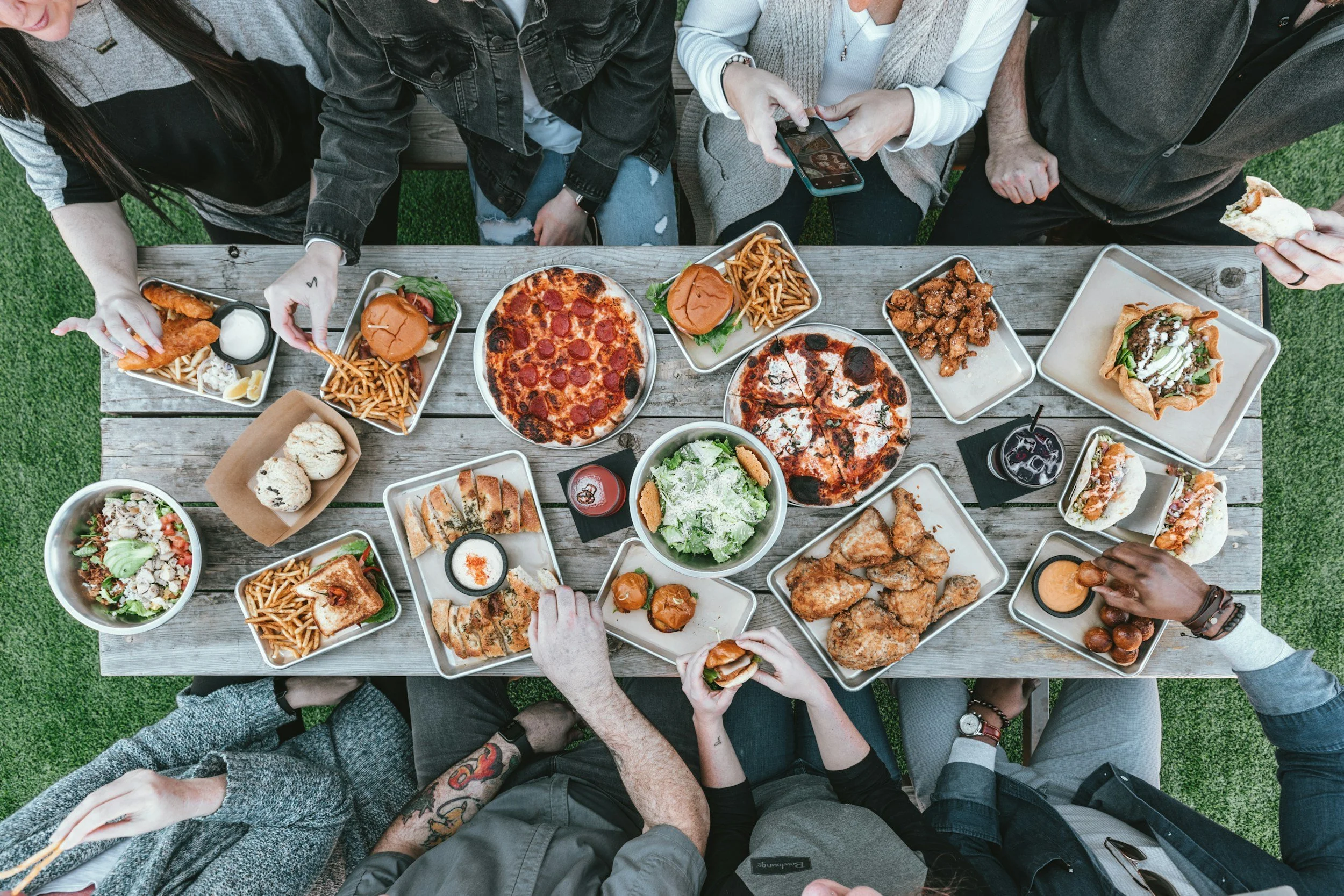
Food can be comforting.
Sometimes you want a warm bowl of pasta after a difficult day. Maybe you reach for ice cream when you're sad, order your favorite takeout after a stressful week, or find yourself snacking while scrolling through your phone at night.
There is nothing inherently wrong with finding pleasure and comfort in food.
In fact, food is supposed to be pleasurable.
But sometimes eating becomes our primary way of coping with stress, boredom, loneliness, anxiety, or difficult emotions. When that happens, you may start wondering:
"Why do I keep turning to food when I'm not physically hungry?"
"Am I an emotional eater?"
"Why does food feel like the only thing that makes me feel better?"
These questions can be especially complicated for people recovering from an eating disorder or trying to heal their relationship with food.
The answer isn't to take pleasure away from food.
Instead, it can be helpful to understand what you're actually looking for when you reach for food, and how you might give yourself more than one way to experience comfort, connection, pleasure, and relief.
What Is Emotional Eating?
Emotional eating generally refers to eating in response to emotions rather than, or in addition to, physical hunger.
You might notice yourself eating when you're:
Stressed
Lonely
Bored
Anxious
Sad
Overwhelmed
Celebrating
Looking for comfort
Wanting a break
Trying to distract yourself
But here's an important distinction: Eating for emotional reasons isn't inherently unhealthy.
Humans don't eat only because we're physically hungry.
We eat because food is enjoyable. We eat socially. We eat to celebrate. We eat because certain foods remind us of home. We eat because sometimes a warm meal genuinely makes a difficult day feel a little easier.
The goal isn't to eliminate emotional eating.
The goal is to develop more options for meeting your emotional needs, so food doesn't have to carry all of that responsibility.
Why Does Food Feel So Rewarding?
Food activates the brain's reward and motivation systems, which makes sense from an evolutionary perspective. Our brains are designed to motivate us toward things that help us survive, including eating.
Dopamine plays an important role in these reward processes, particularly in motivation and "wanting." But dopamine isn't simply a "pleasure chemical." Research on the brain's reward systems distinguishes between the motivation to seek something and the pleasurable experience of actually consuming or experiencing it.
This matters because it helps us move away from the idea that you're somehow "addicted to dopamine" if you enjoy food.
Enjoying food is not a character flaw.
And wanting a particular food doesn't mean you've lost control.
Food can provide sensory pleasure, comfort, familiarity, connection, and satisfaction, all of which are legitimate parts of eating.
Sometimes What We Need Isn't Food, It's What Food Provides
Imagine you've had an exhausting day.
You get home, put on comfortable clothes, order your favorite meal, and curl up on the couch.
The food may be delicious, but it might also be providing something else:
Comfort.
Rest.
Pleasure.
A transition out of work mode.
A moment where nobody needs anything from you.
If you only focus on the food, you might miss the underlying need.
This is one reason it's helpful to get curious about emotional eating instead of immediately trying to stop it.
Ask yourself: "What am I hoping this food will give me right now?"
Maybe the answer is simply, "It tastes good."
Great. You can enjoy it.
But maybe the answer is "I need comfort."
That's useful information, too.
Emotional Eating Doesn't Mean You Have to Take Food Away
If you've ever tried to "fix" emotional eating by creating stricter food rules, you may have discovered that restriction doesn't necessarily make the problem disappear.
For someone with a history of dieting or eating disorder behaviors, trying to control emotional eating can quickly turn into another set of rules:
"I shouldn't eat when I'm stressed."
"I can only eat when I'm physically hungry."
"I need to stop eating after dinner."
"I shouldn't use food as comfort."
These rules can make food feel even more emotionally charged.
And if you're physically underfed or restricting certain foods, your desire to eat may have a very real biological component, not simply an emotional one.
This is especially important in eating disorder recovery. Eating disorder behaviors can affect the brain's reward and food-intake systems, and research suggests that restriction itself can alter reward processing.
So before assuming that every urge to eat is "emotional," make sure you're also giving your body consistent and adequate nourishment.
What If Food Feels Like Your Only Source of Joy?
This is where the conversation gets bigger than food.
If food is the most reliable pleasurable part of your day, the answer isn't necessarily to make yourself stop enjoying it.
Instead, you might ask: "What else feels good to me?"
When we're busy, stressed, or stuck in survival mode, pleasure can become surprisingly narrow.
Maybe your routine is: Work → responsibilities → phone → food → sleep → repeat.
When food is one of the only predictable moments of pleasure, it's completely understandable that you'll look forward to it.
Rather than taking that away, consider adding more moments of pleasure to your life.
Build a Bigger Menu of Pleasure
Think of this as creating a menu of joy.
Not a list of things you "should" do.
Not another productivity routine.
Not another self-improvement project.
Just possibilities.
Connection
Humans are wired for connection, and relationships can be a powerful source of comfort and meaning.
Try:
Calling a friend
Having dinner with someone
Joining a club or community
Spending time with someone who makes you laugh
Asking someone for support when you're having a difficult day
Creativity
You don't have to be "good" at something for it to bring you joy.
Try painting, writing, dancing, photography, playing music, cooking, crafting, or making something simply because you enjoy the process.
Movement
Movement can be a source of pleasure when it's disconnected from punishment, compensation, or changing your body.
Take a walk because you want fresh air.
Dance around your kitchen.
Stretch because it feels good.
Move in ways that help you feel more connected to your body rather than more focused on how your body looks.
Nature
Sometimes pleasure can be incredibly simple.
Sit outside.
Watch the sunset.
Take your coffee onto the porch.
Go for a walk without tracking your steps.
Notice the trees, the temperature, or the sounds around you.
Novelty and Play
Our lives can become very repetitive.
Try something you've never done before.
Take a class.
Visit somewhere new.
Play a game.
Read a book that has nothing to do with productivity.
Do something silly.
You don't need a reason to have fun.
Rest
Rest is often overlooked when we talk about pleasure.
Sometimes what you're craving isn't stimulation at all.
It's a break.
A nap.
A quiet evening.
An afternoon without an agenda.
Permission to do absolutely nothing.
You Don't Have to Earn Pleasure
For people recovering from diet culture or an eating disorder, pleasure can sometimes feel like something that needs to be earned.
I'll have dessert after I work out.
I'll relax once I've finished everything on my to-do list.
I'll let myself enjoy this once I've been "good."
But pleasure doesn't need to be a reward for productivity.
You don't need to accomplish enough to deserve a good day.
You don't need to exercise enough to deserve your favorite meal.
You don't need to eat "perfectly" to deserve rest.
Pleasure is part of being human.
And learning to experience pleasure without immediately turning it into a reward system can be an important part of healing your relationship with yourself.
What to Do When You Notice You're Eating for Comfort
The next time you notice yourself reaching for food when you're stressed, pause for a moment.
Not to determine whether you're "allowed" to eat.
Not to talk yourself out of eating.
Just to get curious.
Ask:
What am I feeling right now?
What do I need?
What sounds comforting?
Am I physically hungry?
What would feel supportive right now?
And then give yourself options.
Maybe you eat.
Maybe you call a friend first.
Maybe you take a shower and then eat.
Maybe you go outside and realize you need some fresh air.
Maybe you do both.
You don't have to choose between listening to your emotions and listening to your body.
What If I Still Want the Food?
Then eat the food.
This is an important part of the conversation.
The goal of developing other sources of comfort is not to make food less enjoyable or to distract yourself from eating.
If you want the cookie, you can eat the cookie.
If you want takeout after a hard day, you can order takeout.
If ice cream sounds comforting when you're sad, you can have ice cream while you're sad.
Food doesn't have to become the enemy simply because you've learned that you have other ways to cope.
The goal is flexibility.
Sometimes food is what you need.
Sometimes you need a hug.
Sometimes you need sleep.
Sometimes you need to cry.
Sometimes you need to laugh with your best friend.
Sometimes you need all of the above.
If You're in Eating Disorder Recovery
This conversation can feel especially complicated during eating disorder recovery.
You may be trying to determine whether you're eating because you're hungry, because you're emotional, because food is available, or because you're experiencing an eating disorder urge.
You don't necessarily need to solve that mystery every time you eat.
In recovery, part of the work may actually be learning that you can eat for many different reasons without needing to justify each one.
Your body deserves consistent nourishment.
Your brain deserves pleasure.
Your emotions deserve attention.
And you deserve a life that contains more than food rules.
If you're noticing that eating has become one of your only sources of comfort or that you're struggling with guilt, restriction, binge eating, or fear around food, working with an eating disorder-informed therapist can help you understand what's underneath those patterns without adding more shame.
You Deserve a Life That Feels Good in More Than One Way
Food can bring us joy.
It should.
But food doesn't have to be responsible for creating all of the joy in your life.
You deserve friendships that make you laugh.
Music that gives you chills.
A hobby that makes you lose track of time.
A walk that clears your head.
A book you can't put down.
A meal you genuinely savor.
A quiet morning.
A spontaneous adventure.
A really good conversation.
A life where pleasure doesn't have to be earned.
Instead of asking yourself, "How do I stop emotional eating?", try asking a more compassionate question:
"How can I create a life where I have many ways to feel comforted, connected, nourished, and joyful?"
You don't need to take joy away from food to find joy elsewhere.
You can make room for both.
If you're struggling with your relationship with food or feel like eating has become your primary way of coping with difficult emotions, therapy can help you explore those patterns with compassion. At Thrope Therapy, we support clients navigating eating disorders, emotional eating, body image concerns, and the process of building a more peaceful relationship with food and themselves.