I Started Dieting in Fifth Grade
I Started Dieting in Fifth Grade
A backstory of how I got here and why I became a therapist who specializes in Eating Disorders
Written by Lily Thrope, LCSW
I do not usually write about myself on here. Most of what I post is for the person on the other side of the screen, the one wondering if what they are going through has a name, if it is serious enough to get help for, or if recovery is actually possible for someone like them.
This post is still for that person. It just happens to also be my story.
Fifth Grade
I developed early. Got my period in fifth grade, started wearing a bra before most of my classmates, started getting attention from boys that I was way too young to understand. My body changed before my mind caught up to it, and somewhere in that gap, I decided the answer was to make myself smaller.
I wrote in my fifth grade journal what I ate each day. I was ten years old. I remember the specific logic, eat the least, take up less space, be less visible to whatever was making me uncomfortable. I did not have words for any of it. I just did it.
Around the same time, I also started writing things in that journal like: I do not want to be here. I was ten. I did not understand that depression was a clinical thing with a name. I just knew something felt wrong in a way I could not explain.
The Athlete Who Was Always Dieting
Through middle school and high school, I played competitive soccer. I was serious about it. I trained hard, I committed, I loved the game. I was also always trying to diet at the same time.
I think about that a lot now and I genuinely wonder whether I was a worse athlete because of it. Whether my body, chronically under-fueled and stressed, was performing at a fraction of what it could have been. Sports nutrition was not something anyone talked to me about. The message, spoken or not, was smaller is better. I absorbed it completely.
Underneath the soccer and the grades and the structured life, there was also depression getting louder. I was restricting food and planning early morning runs and writing in my journal about exactly what I would and would not allow myself to eat that day. From the outside, I probably looked like a motivated, high-achieving teenager. That is the thing about this kind of eating disorder, it tends to hide in plain sight.
Junior Year
In my junior year of high school, I stopped being able to hold it together. I cut off my friends. The depression that had been running underneath everything came to the surface. Things got really dark for me.
I have not shared about my depression publicly, but I am sharing it now because I think it matters for people to know. I hope that by sharing my journey I can reduce the stigma. For years I thought I was uniquely broken. I was a high-functioning person by most measures, I played sports, I went to school, I had friends, and I still ended up at a place where I did not want to be alive. Those things are not contradictions and often coexist.
After that, something shifted. I started getting real treatment for the first time, for the depression, and beginning to acknowledge that my relationship with food was not normal, even if I did not have a full name for it yet.
College, and a Yoga Program That Looked Like Wellness
I went to college in California and played soccer and lacrosse. I was still pretty disordered, orthorexic is the word I would use now, though I did not know that word then. I was managing, but I was not thriving.
During college I got certified through a yoga program built around a specific way of eating, grain-free, dairy-free, high intensity. Even writing those words “grain-free dairy-free” feels triggering to this day. There was real community in the yoga community, and I genuinely enjoyed parts of it. Looking back, I can also see the ways in which it was toxic. It was another system of rules dressed up as health. I got very muscular in a way I had not been before, and I mistook that for being well.
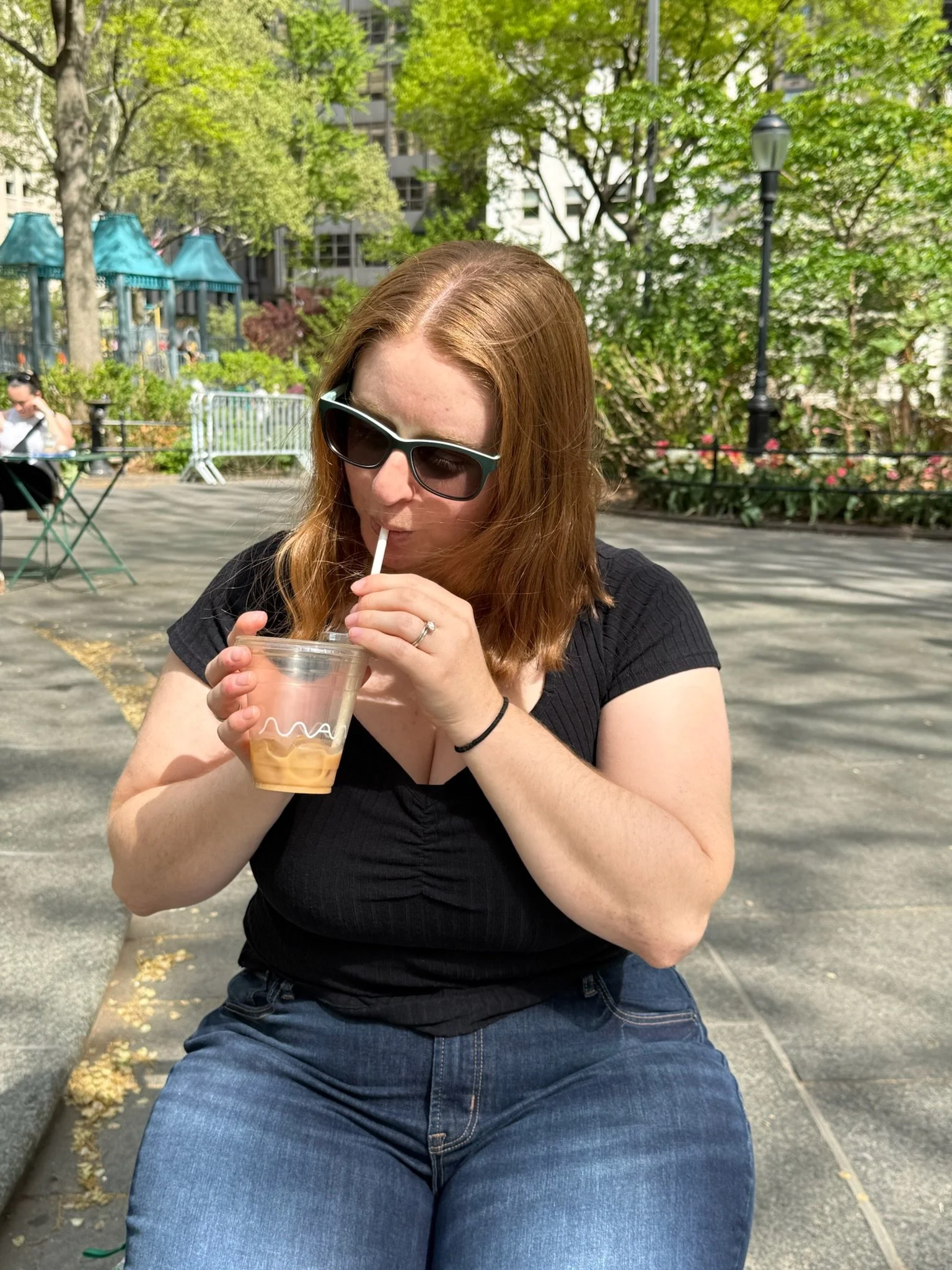
After graduation, I moved to New York City for graduate school to become a social worker and wasn’t fully prepared for all the changes that would come.
The Conversation That Changed Things
In grad school, I met a dietitian named Caitie. She is someone I collaborate with to this day. At some point, she sat me down and told me what she had been observing. She named it clearly: you have an eating disorder.
I do not know why I could hear it that day when I had not been able to hear it before. Something about the way she said it, direct, specific, caring, got through. She sent me some podcasts on intuitive eating and I listened to them. They made me feel seen in a way I did not expect. Like someone had described my inner life back to me.
I found a therapist who specialized in eating disorders and an intuitive eating dietitian. I started actual, supported recovery for the first time.
What Recovery Actually Looked Like
For me, the most active symptoms were overexercising and restriction. I was doing multiple workout classes a day, hitting high step counts religiously, following whatever food framework I had adopted that season, paleo, vegan, everything. I had been doing versions of this since fifth grade.
Letting it go was not dramatic. It was quiet and slow and not really noticed by many. The moments of growth came from things like eating a thick piece of Challah French Toast and sending a picture to my dietitian. I remember vividly feeling so free as I had started to include some fear foods back into my life.
I found recovery at a time when I was ready, and I was lucky to have amazing, supportive clinicians around me. My community of friends and family was also really supportive, which helped. They could all see me starting to come back to myself and were cheering me on.
I took about two years mostly away from structured exercise. I needed to let my relationship with movement reset entirely. I needed to not know what I burned or how far I went or whether I had done enough.
Last year, I ran a marathon. I am training for another one now. The difference is that I am not doing this to punish myself, I am doing it in celebration with myself. I am moving in ways that feel joyful and not rigid and conditional. I am able to move with more nourishment which also makes a huge difference in enjoying exercise.
Why I Do This Work
I became an LCSW and a certified intuitive eating counselor because I know what it is to be in that body, writing in that journal, not yet having a name for what is happening.
I built Thrope Therapy around the specific belief that what you have been calling a bad relationship with food has a name, a reason, and a way through. I am not saying that to just say it, I really believe it. I was lucky enough to have someone sit across from me and change my life with a few words. As a therapist I get to be that gentle person who points out someones disorder and recognizes their pain for the first time.
If you are reading this and any part of it resonated, the early dieting, the athlete who was always restricting, the high-functioning person who was quietly falling apart, I want you to know that it does not have to stay that way. Recovery is not reserved for people whose stories look a certain way.
You are allowed to get help for exactly what you are experiencing right now.
If you are ready to talk, Thrope Therapy offers free consultations.
You can reach us at thropetherapy.com or through our Instagram @thropetherapynyc. We work with individuals in New York and online.
About Lily Thrope, LCSW
Lily is the founder of Thrope Therapy, a boutique group practice in Midtown Manhattan specializing in eating disorders, body image, and related concerns. She is a licensed clinical social worker and certified intuitive eating counselor, and the founder of the Recovery Supper Club, a free monthly dinner gathering for people in recovery in New York City.