
What’s Underneath an Eating Disorder in Teens? Understanding the Root Causes
When a teen develops an eating disorder, it can be tempting to focus on the behaviors we can see. Maybe they’re skipping meals, exercising more than usual, becoming increasingly rigid around food, or expressing distress about changes in their body. But in my work with teens and adults struggling with eating disorders, I’ve found that it’s just as important to understand what’s happening underneath those behaviors. Eating disorders don’t develop in a vacuum. Sometimes, food and body-related behaviors become a way to cope with difficult emotions, navigate changing relationships, feel accepted by others, or regain a sense of control when life feels uncertain. In this episode of Full Recovery Is Possible, I sat down with Kelly Mosser to talk about what may be driving an eating disorder in teens, how parents can recognize potential warning signs, and how to support a teen without making them feel powerless.

How to Leave Diet Culture When Your Family Is Still In It
Diet culture refers to the beliefs we absorb from our environment about food, bodies, and weight. It teaches us that thinness is something we should all strive for and is associated with being healthier or more attractive. These ideas are misleading and can create unhealthy expectations around food and our bodies. Diet culture includes the feelings and attitudes we develop around dieting from those we surround ourselves with. Just like a religious or community culture, diet culture can become a shared perspective that shapes what people believe about eating, health, and what our bodies should look like. These cultural norms have been reinforced through the media and passed down across generations, continuing to shape the way we think and feel about our bodies.
7 Myths About Eating Disorders in Teens Every Parent Should Know
When most people picture someone with an eating disorder, they have a specific image in mind. Maybe they imagine someone in a smaller body who barely eats or someone whose physical health has become visibly compromised. But eating disorders don't have one particular look, and believing they do can prevent teenagers from getting the support they need. As an eating disorder therapist, one of the things I feel most passionate about is helping parents understand that eating disorders can affect anyone, regardless of their body size, gender, age, or athletic ability.
Signs of an Eating Disorder in Teens: What Parents Should Look For
As a parent, you know your teenager better than almost anyone. You may notice subtle changes in their mood, behavior, or relationship with food long before you have a clear explanation for what's happening. Maybe your teen has become increasingly concerned about their appearance. Perhaps they're avoiding certain foods, withdrawing from social activities, or seeming more anxious or irritable than usual. You might have noticed these changes for weeks or months without knowing whether they're cause for concern. In my work as an eating disorder therapist, I know that recognizing the signs of an eating disorder in teens isn't always straightforward. Eating disorders and disordered eating can look different from one person to another, and some warning signs are easy to mistake for typical teenage behavior.

When Exercise Stops Feeling Like a Choice: Signs of Compulsive Exercise
Compulsive exercise refers to a pattern of exercise that feels driven, rigid, or difficult to control, even when continuing to exercise may be physically or emotionally harmful.
It isn't necessarily about how many hours you exercise or how intense your workouts are.
Two people can have the exact same exercise routine, but one may experience it as enjoyable and flexible while the other experiences it as an obligation they can't escape.
The question isn't simply: "How much do I exercise?"
It's also: "What happens when I don't?"

Do I Have an Unhealthy Relationship With Food? Signs It May Be Time for Support
When you think about eating disorders, you might picture someone who is severely restricting their food, visibly underweight, or engaging in behaviors like bingeing and purging.
But eating disorders and disordered eating don't always look the way we expect them to.
You don't have to have a diagnosis to struggle with food.
You don't have to be at a certain weight.
And you don't have to feel like your relationship with food is "bad enough" to deserve support.
Sometimes the signs are much quieter.
Maybe you think about food constantly. Maybe you feel anxious when you don't know what you'll be eating later. Maybe you have a list of foods you consider "good" and "bad." Maybe you regularly skip meals because you ate "too much" the day before. Maybe you exercise to compensate for what you've eaten.
Or maybe you technically eat a wide variety of foods, but you spend an enormous amount of mental energy worrying about what, when, and how much you're eating.
You may find yourself wondering:
"Is this normal?"
"Does everyone think this much about food?"
"Do I actually have a problem?"
The answer isn't always straightforward. But your relationship with food doesn't need to meet some imaginary threshold of seriousness before you are allowed to seek help.

Emotional Eating: What Your Brain Is Really Looking For and How to Find More Sources of Comfort
Food can be comforting.
Sometimes you want a warm bowl of pasta after a difficult day. Maybe you reach for ice cream when you're sad, order your favorite takeout after a stressful week, or find yourself snacking while scrolling through your phone at night.
There is nothing inherently wrong with finding pleasure and comfort in food.
In fact, food is supposed to be pleasurable.
But sometimes eating becomes our primary way of coping with stress, boredom, loneliness, anxiety, or difficult emotions. When that happens, you may start wondering:
"Why do I keep turning to food when I'm not physically hungry?"
"Am I an emotional eater?"
"Why does food feel like the only thing that makes me feel better?"
These questions can be especially complicated for people recovering from an eating disorder or trying to heal their relationship with food.
The answer isn't to take pleasure away from food.
Instead, it can be helpful to understand what you're actually looking for when you reach for food, and how you might give yourself more than one way to experience comfort, connection, pleasure, and relief.

When Diet Culture Gets Louder: How to Stay Grounded in Your Health, Not Your Appearance
One of the most important things to remember when diet culture becomes louder is that cultural beauty standards are constantly changing.
The "ideal" body has never been a fixed concept.
At different points in history, larger bodies have been idealized. At other times, extreme thinness has been celebrated. We've seen trends move toward curves, then thinness, then "fit" bodies, and now toward increasingly narrow ideas of what a desirable body should look like.
Your body didn't suddenly become more or less worthy because the cultural ideal changed.
And neither did your health.
A trend can change without you needing to participate in it.

How to Talk to Kids and Teens About Sex Without Shame
Talking to your child about sex can feel uncomfortable. Maybe you didn't grow up having open conversations about sex with your own parents. Maybe you're worried about saying too much, saying the wrong thing, or accidentally encouraging behavior you're not ready for your child to explore.
And sometimes the conversation starts in a way you weren't expecting.
Maybe you find a sexually explicit book in your teenager's room. Maybe they ask you a question about sex that catches you completely off guard. Maybe they mention something they saw online, or you're suddenly realizing that they're starting to have questions about relationships, intimacy, and attraction.
Whatever prompts the conversation, your first instinct might be to panic.
You don't have to.

LGBTQ Couples Counseling: What to Expect and How to Find an LGBTQ-Affirming Therapist
Relationships can be complicated. Every couple experiences conflict, disconnection, misunderstandings, and periods of change. But for LGBTQ+ couples, there can sometimes be additional layers that affect the relationship—from coming out and family dynamics to navigating gender identity, societal expectations, discrimination, or internalized shame.
That doesn't mean LGBTQ+ relationships are inherently more difficult or less healthy. It means that LGBTQ+ couples deserve therapy that understands the full context of their experiences rather than expecting their relationship to fit into a traditional, cisgender, heterosexual framework.
LGBTQ couples counseling provides a space for partners to work through relationship challenges while also having their identities, experiences, and relationship structure respected and affirmed.

The "Let Them Theory": A Therapist's Perspective on When It Helps, and When It Doesn't
If you've spent any time on TikTok, Instagram, or podcasts recently, you've probably heard someone say:
"Let them."
Someone doesn't text you back? Let them.
Someone judges you? Let them.
Someone doesn't invite you? Let them.
The idea, popularized by Mel Robbins, has become one of the biggest mental health conversations online because it offers something many of us desperately want: relief from constantly worrying about what everyone else thinks.
As a therapist, I actually think there's a lot to like about the "Let Them Theory."
But like most viral mental health advice, it's only helpful when it's applied thoughtfully.
The reality is that healing isn't about ignoring your emotions or pretending you don't care. It's about learning what you can control, what you can't, and how to respond in ways that support your well-being.

Growing Up with an "Almond Mom": How Childhood Diet Culture Can Affect Your Relationship with Food
The term "almond mom" has taken over social media, sparking conversations, and plenty of memes, about growing up with parents who were constantly dieting or closely monitoring food. Maybe your mom encouraged you to "just have a handful of almonds" instead of a meal. Maybe she labeled foods as good or bad, talked about calories at the dinner table, or frequently commented on her own body or yours. While the trend can be funny, it also resonates with many people because it reflects a very real experience: growing up surrounded by diet culture.
If you've ever wondered why you struggle to trust yourself around food or feel guilty after eating, your childhood experiences may be part of the story.

What Is Photo Grief? Understanding Why Photos Can Trigger Strong Emotions
Photo grief is the emotional response to images that evoke loss, longing, or sadness. This could be a photograph of someone who has passed, a memory of a place or time that’s gone, or even pictures of yourself that bring up complicated feelings about identity, body image, or life changes. Photos can be a physical representation of so many emotions that live under the surface. Sometimes seeing a photo can evoke stronger emotions than when you think about the past. Seeing the physical memory can be really powerful.

How the Nervous System Affects Eating Disorders and Recovery
Many people think of eating disorders as primarily about food, weight, or body image. While these are part of the picture, the reality is that eating disorders are complex mind-body conditions, strongly influenced by the nervous system. The nervous system plays a critical role in how we experience hunger, fullness, emotion, stress, and safety. Understanding this connection helps explain why eating disorder behaviors are so compelling, and why recovery is often non-linear.
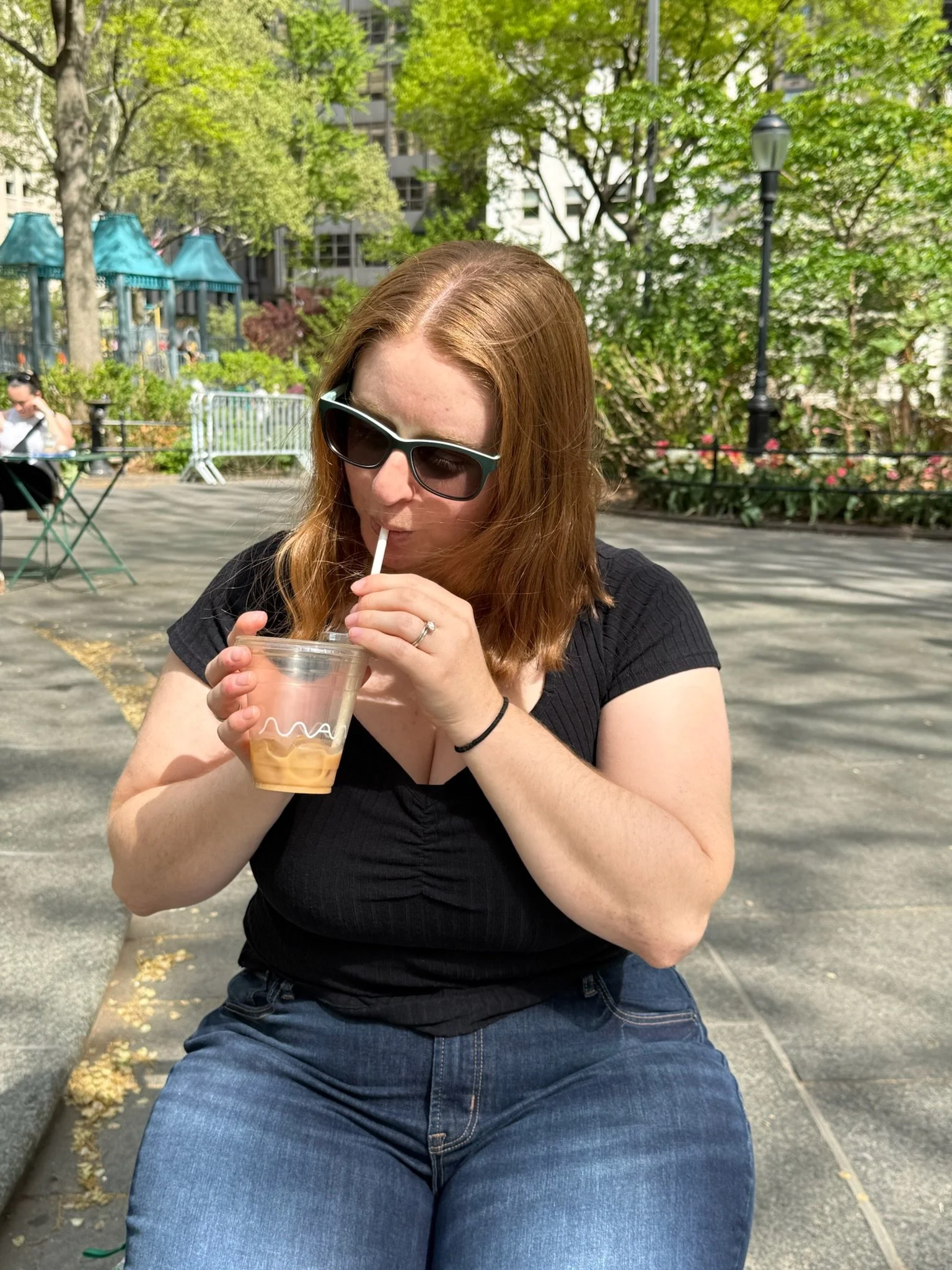
I Started Dieting in Fifth Grade
Lily is the founder of Thrope Therapy, a boutique group practice in Midtown Manhattan specializing in eating disorders, body image, and related concerns. She is a licensed clinical social worker and certified intuitive eating counselor, and the founder of the Recovery Supper Club, a free monthly dinner gathering for people in recovery in New York City.

Is My Teenager's Relationship With Food Normal? Signs to Watch For
Adolescence is genuinely a complicated time for food and bodies. Teenagers are undergoing real physiological changes. They are developing their own identities and testing independence, including around food choices. They are swimming in a social media environment that is saturated with diet culture, fitness content, and body commentary. Some food experimentation and self-consciousness about appearance is developmentally typical. This makes it genuinely hard to know when something has shifted from normal teenage behavior into something that warrants real concern. The line is not always obvious, and teenagers are often skilled at minimizing what is happening, whether or not they are doing so consciously.

How to Find an Eating Disorder Therapist in New York City
In New York City, most therapists list eating disorders as one of many things they treat. You will find eating disorders alongside anxiety, depression, relationship issues, life transitions, and trauma on the same profile. That is not necessarily a red flag. A therapist can genuinely work well with a client whose eating disorder co-occurs with depression or anxiety. What matters is whether eating disorders are a genuine clinical focus, not just a checkbox. And there are ways to tell the difference.

What Does Orthorexia Look Like? Signs Your Healthy Eating Has Become a Disorder
Orthorexia nervosa is an eating disorder characterized by an obsessive focus on eating what one perceives to be perfectly healthy or pure food. Unlike anorexia, which is primarily about restriction for the purpose of weight loss, orthorexia is about purity and control. The person is not necessarily trying to lose weight. They are trying to eat correctly, and the definition of correctly becomes increasingly narrow and rigid over time. Orthorexia is not currently listed as a formal diagnosis in the DSM-5, but it is widely recognized by eating disorder clinicians and researchers as a real and clinically significant pattern that causes genuine harm. The absence of a formal category does not mean it is not real or that it does not deserve treatment.

Binge Eating Disorder vs. Overeating: What's the Difference?
One of the most important things I can do as an eating disorder therapist in New York City is help people understand the difference between overeating, which is a normal human experience, and binge eating disorder, which is a clinical condition that deserves real, specialized treatment. Because one of the most consistent patterns I see is people spending years suffering through something treatable because they have convinced themselves it does not qualify as a real problem.

What Is ARFID? A Guide for Exhausted Parents in New York City
ARFID stands for Avoidant/Restrictive Food Intake Disorder. It is an eating disorder, and it is one of the most commonly misunderstood ones because from the outside, it just looks like a very picky eater. But picky eating and ARFID are not the same thing. Picky eating is common in childhood. Kids go through phases where they refuse vegetables, or will only eat beige foods, or suddenly decide that chicken is disgusting after eating it happily for years. This is developmentally normal and usually resolves on its own over time. ARFID is different. With ARFID, the avoidance of food is not a preference or a phase. It is driven by fear, sensory distress, or a deeply conditioned anxiety response around certain foods. The experience of eating certain textures, smells, colors, or temperatures is genuinely distressing, not just unpleasant.